


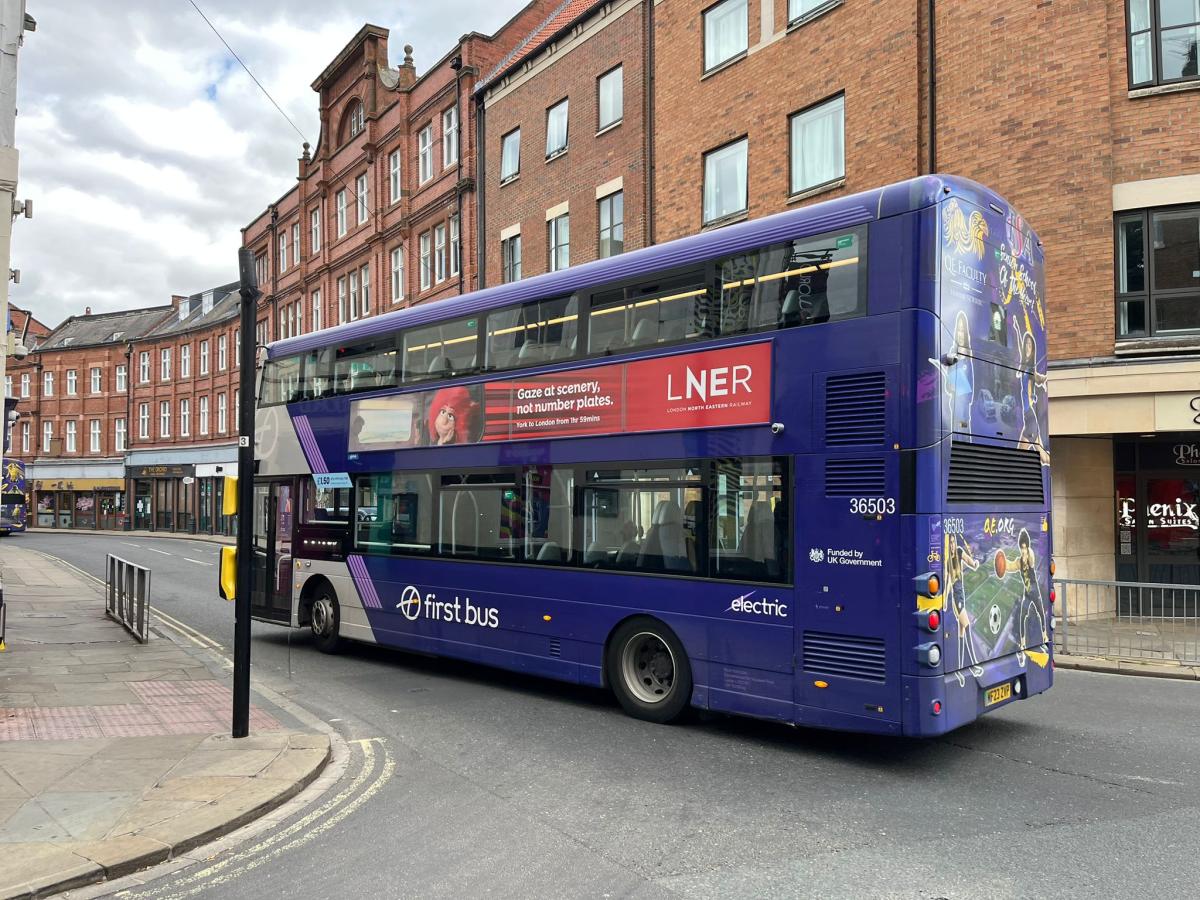


MEASURES which aim to cut congestion and improve bus services along a major York travel corridor have been approved for a trial.
A ban on private traffic driving from Rougier Street to Micklegate via George Hudson Street is set to start in January for an initial trial of 18 months costing £2.35 million.
Bus operators and others welcomed the move, saying the reliability of services suffering due to city centre congestion was the biggest challenge facing local public transport.
But concerns have been raised about how the restrictions will work in practice and that the trial could become politicised in the run up to local elections next May.
Cllr Kate Ravilious, the council’s Labour transport spokesperson, said more people needed to be able to use reliable public transport as York’s population continues to grow.
RECOMMEDED READING:
- What could happen with new traffic rules during major York roadworks next year
- When private traffic ban on major York route to boost buses could start
- Warnings over York traffic plans as official says 'doing nothing isn't an option'
The decision of the council’s executive on Tuesday, July 7 to approve the trial is set to see the Rougier Street-George Hudson Street-Micklegate route closed to most private through traffic.
Its use will be restricted to buses, emergency services vehicles, pedestrians and cyclists, with Blue Badge holders and hackney carriage taxis exempted from the ban.
Bishophill residents will also be allowed to access the route to drive to and from their homes.
A registration system costing £150,000 set to be created to control theirs and other exempted vehicles’ access.
Rules will be in force from 7am to 11pm daily, with those breaking them set to receive warnings for the first six months of the trial and fines issued afterwards.

A new one-way loop would send private traffic from Rougier Street and along Tanner Row, Toft Green and Micklegate to the junction with George Hudson Street.
A bus lane would run southbound along George Hudson Street with a ‘bus gate’ in place from the road’s junction with Micklegate to the latter’s junction with Skeldergate and North Street.
The meeting heard January was chosen for the start of the trial because roads were expected to be at their quietest.
Tom Horner, the council’s transport behaviour lead, told Tuesday’s meeting said the route was the missing piece of the jigsaw in wider efforts to improve public transport.
He added officials would closely monitor the trial including changes to traffic.
Steve Moyle, general manager of First Bus in York, said current delays were resulting in passengers arriving late for work, medical appointments and other commitments.
The Confederation of Passenger Transport industry body’s North Manager Andrew McGuinness said the changes would support York’s economy, environment and its residents.
Mark Venables, of York Civic Trust's Transport Advisory Group, said they supported the scheme but feared it could become a political battleground in the months leading up to next year’s local elections.
Disability rights activist Flick Williams said she welcomed exemptions for Blue Badge holders but feared the scheme being a trial meant they could be removed if officials wish.
Mark Goldsborough, director of private hire firm Streamline Taxis, said exempting their vehicles from the ban would leave passengers facing longer journeys.
Green Party activist Andy D’Agorne said they were concerned it could encourage people to make illegal right turns from Nessgate into Coney Street to use it as a cut through.
Liberal Democrat opposition transport spokesperson Cllr Stephen Fenton said there would be unexpected and unintended consequences resulting from the trial which should be monitored.
Labour Transport Executive Member Cllr Ravilious said the fact the scheme was being trialled meant it was not the end of the conversation in response to concerns raised.
The executive member said: “Growing congestion is a big problem, this enables more people to travel by bus and has massive potential to reduce car trips into the city centre.”


Share