


LAST year, during the worst UK recession since the war, tourism generated £442 million for York’s economy. That is more than £2,240 for every man, woman and child in the city, based on the city’s population of 197,000.
So would it be fair to say that tourism wasn’t hammered by the economic downturn?
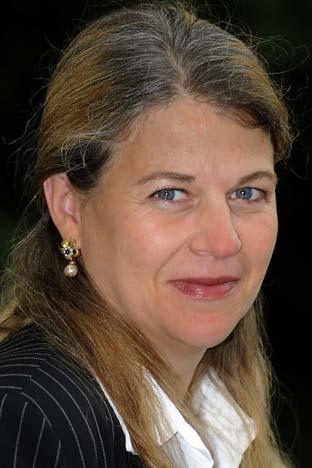
“We’ve had a good year,” says Gillian Cruddas, chief executive of Visit York. “It has been a tough year. People have been looking for good value, for bargains. Businesses have had to be flexible on their pricing. But I think York and Yorkshire have held up well.”
In 2008, visitors to York brought £364 million into the city’s economy. So the income generated by tourism actually increased last year – and by a lot.
It’s not that simple, Gillian says. There is a new way of calculating tourism income. The £442 million total for 2009 includes factors such as the money spent by certain business travellers, and by those visiting friends and relatives in York, that were not counted in 2008.
“But even so, things were very healthy,” she says.
About four million visitors come to York every year, and the tourism sector generates more than 10,000 jobs in the city.
Other headlines from last year include:
• The city benefited from ‘staycationers’: British people choosing to holiday in the UK rather than go abroad
• York also benefited from money spent on national and international advertising by Welcome To Yorkshire, formerly the Yorkshire Tourist Board. The organisation has £30million to spend on marketing the region over the next three years.
• The increase in European visitors expected because of the low pound did not happen, but there was an increase in the number of American visitors
• The number of people visiting attractions in York was up by 12,000 on 2008
• People were also staying longer in the city: an average of more than five days.
On the downside, there was a fall in the number of conference and business visitors, and the average rate charged for a hotel room in the city fell slightly, from £75.40 to £73.01.
But the still future looks bright, says Mrs Cruddas.
There has been a lot of interest in York as a conference destination, and there are plenty of foreign journalists and foreign travel professionals visiting the city. “At the moment, we have about four lots of tour operators here, from China, Canada, Australia and India.”
Recent investment in York, including the £1m facelift for Jorvik and the ongoing revamp of the Yorkshire Museum, will help to increase visitor numbers, Mrs Cruddas says. As, too, should the city’s first five-star hotel – the Cedar Court Grand, near the railway station – which is due to open at the end of next month.
“So all in all, we’re looking forward to a good year.”
Top eight York tourist attractions in 2009
• National Railway Museum – 722,066 visitors
• York Minster – 448,203 visitors
• Jorvik – 346,659 visitors
• Castle Museum – 284,481 visitors
• York Dungeon – 137,648 visitors
• YorkBoat – 137,277 visitors
• Clifford’s Tower – 109,749 visitors
• Yorkshire Museum – 57,738 visitors
Food and drink
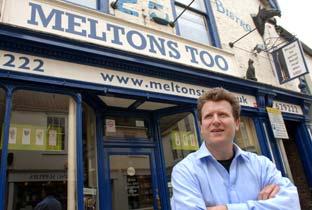
MICHAEL Hjort runs Meltons, in Scarcroft Road, and Meltons Too, in Walmgate, where takings were up about 15 per cent last year. He says food and drink are tourist attractions in their own right.
“I think it’s about offering value at whatever price level. Meltons Too offers home-made cooking in an independent restaurant which isn’t that common really.
“But when tourists arrive they want to go somewhere familiar, like a chain. They leave being adventurous until later on and I think we fit in well with the Fossgate ethos. You come down here for something just that little bit different and that’s what any destination needs, something different.
“York has done well despite the recession, but I think the whole city needs to be a little bit more about live culture and a little bit less about historical preservation. We need to invest in a new project because refurbishing and investing like at the Jorvic centre attracts people back.
“And it’s undoubtedly true that things like the food festival are good for tourism because they give people a reason to visit now rather than put it off. That’s crucial.”
The tour guide
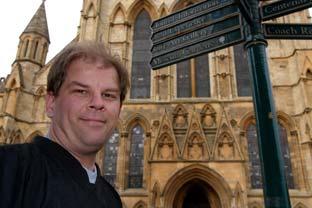
KEITH Mulhearn is always out and about in the city, sometimes dressed as a Roman centurion, sometimes as a Viking.
His company, Complete York, runs ‘costumed tours’ as well as staging battlefield tours and running conferences.
So how was the recession for him? He scarcely noticed it, he says.
“It was maybe a little bit quiet in December and January. But last year was busy, and things are looking very promising for this year as well.”
York had good press in the international travel media last year, Keith says – a sign of what a good job Visit York and Welcome To Yorkshire are doing to promote the city. “I’m outside the Minster now,” he said.
“There are a lot of Chinese people there taking photos. A lot of them will have come because of articles that have been written.”
The hotelier
LAST year was mixed for hotels in York.
In terms of families, the city did exceptionally well, says Katharina Barenthien, general manager of the York Marriott in Tadcaster Road and chair of the York Hoteliers’ Association.
The trend towards holidaying in the UK instead of going abroad during the recession really did help. So did the value of the pound against the Euro. “And Welcome to Yorkshire did a lot of advertising for this area, which had been bought at the right time.”
The result was an increase in the number of families and holidaymakers visiting and staying in York last year.
For hotels, however, the news on corporate and conference business was less encouraging. It was here that the recession really hit. “The business and conference side certainly slowed down for York,” says Katharina.
York really needs a decent-sized conference venue – somewhere such as The Barbican “would be ideal”.
The museum boss
THERE was a slight drop in the number of people visiting Jorvik last year. Visitor numbers for the Viking museum were down from 365,268 in 2008 to 346,659, according to Visit York.
But in percentage terms, that was a tiny drop, points out John Walker, chief executive of the York Archaeological Trust, which runs the museum. It was only to be expected – and compared to many other sectors, Jorvik did well. “You’d have to say ‘what recession?’”
Following its £1million revamp, Mr Walker expects Jorvik to have another good year. Since it reopened, the museum has already had the best weekly visitor attendance for ten years. And it is expecting its 16 millionth visitor some time this summer.
The fact that the trust was willing to invest £1million in a revamp during a recession showed how much confidence the organisation has in its flagship museum, Mr Walker says. “We believe we’re on an upward curve.”
The tour boat operator
YORKBOAT maintenance manager Chris Agar is busy preparing his flotilla for the coming season. So how did the recession affect his company?
People are far more conscious of value these days, Chris says. “So if it’s rainy they might go to say the dungeons instead. We also have our self-drive Red Boats, which cost less than buying individual tickets for the tour boats.”
Nevertheless, YorkBoat did well during the recession. Visitor numbers were up 22 per cent, says Louise Grapes, YorkBoat’s reservations sales co-ordinator – partly due to the large number of Britons holidaying in the UK instead.
“From speaking to crew members, I would say we experienced a higher demand for our cruises due to many people opting for ‘staycations’,” she says.
What visitors think
EVERY year Donald Harris, from Niagara Falls, in Canada, brings students to Britain and this is the first time he has brought his party to York.
“It is safe, it’s historic and a nice place to visit. You don’t have to worry about anything here and I know my students will be okay,” he says.
“For my students, walking through medieval streets is totally unfamiliar. As a place to visit, I rank York second only to London.”
Lila Tang, from Shanghai, is an exchange student in Liverpool. “I came to York because it’s very famous and I’d heard it’s really English and historic,” she says. “It’s stunning and I think the best city in the north.
“I didn’t expect it to be this beautiful. I really like the walls and I walked all round them taking lots of nice pictures. The Minster is the best thing I’ve ever visited.”
Fellow student Mentyao Xu, also from Shanghai, says: “I would tell anyone to come to York because it is so beautiful.”
Faisal Al Harthy, from Riyadh, visiting with his Russian friend Vera Stebanova, says: “It’s a beautiful city and probably the best place I’ve been to in England.”


Comments: Our rules
We want our comments to be a lively and valuable part of our community - a place where readers can debate and engage with the most important local issues. The ability to comment on our stories is a privilege, not a right, however, and that privilege may be withdrawn if it is abused or misused.
Please report any comments that break our rules.
Read the rules hereLast Updated:
Report this comment Cancel